Ear Infections: More than just ear pain


Ear infections don’t always end when the pain disappears. Lingering fluid can affect hearing for weeks, making communication and learning much harder. Knowing when to seek help can make all the difference.
When your child has an ear infection, it’s easy to focus on the obvious signs – ear pain, distress, restless nights or a fever. But what many parents don’t realise is that an ear infection doesn’t always end when the pain goes away.
After the ear infection clears, fluid can remain trapped behind the eardrum for weeks – or even months. This condition is known as glue ear (otitis media with effusion). While this fluid isn’t usually painful, it can temporarily reduce hearing, making everyday conversations, learning and social interactions much more challenging. During the critical early years of speech, language and learning, even mild hearing loss can have a significant impact.
What Causes Fluid in The Ear?
Middle ear infections (acute otitis media) are one of the most common reasons young children visit a Doctor or General Practitioner (GP). It often starts with a common cold – an upper respiratory tract infection that can cause a runny nose, cough and a sore throat. Colds are viral infections of the upper respiratory tract, caused by over 200 respiratory viruses. The middle ear can get infected when these viruses travel from the throat and nose into the middle ear, via the eustachian tube. When a child is unwell, the eustachian tube can become swollen, trapping fluid in the middle ear.
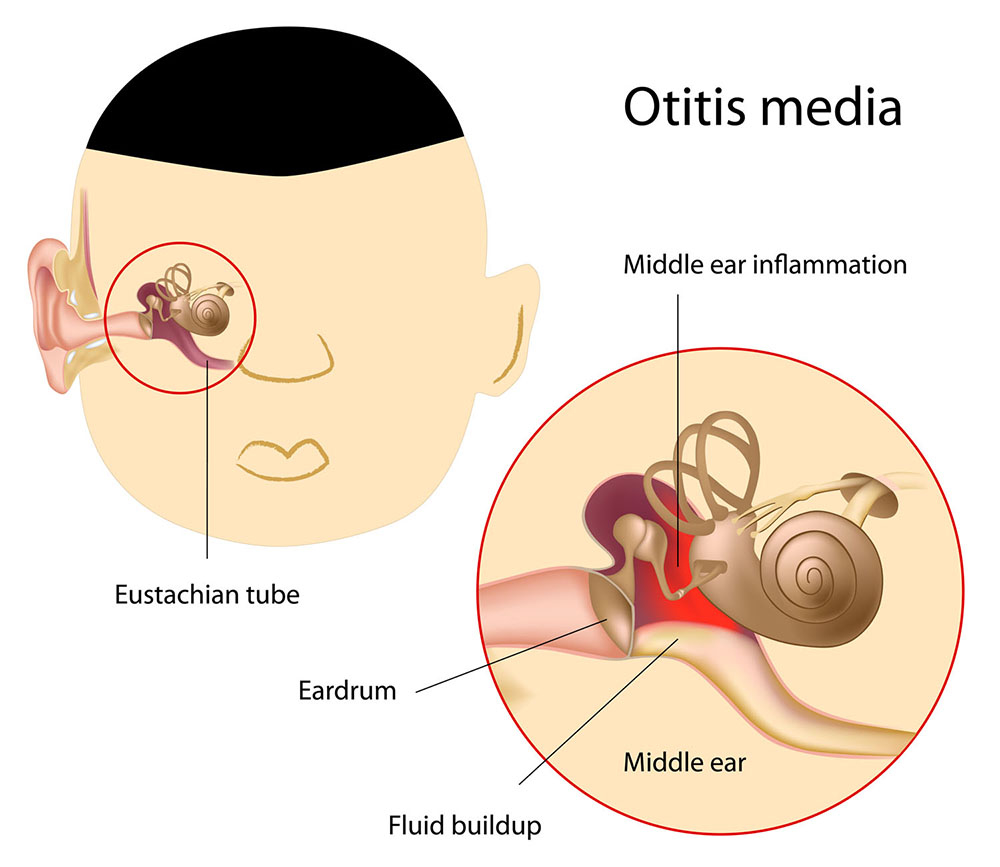
Symptoms of an ear infection include:
- Ear pain
- Fever
- Irritability / tugging the ear
- Difficulty sleeping
- Distress or fussiness
- Balance disturbance
- Reduced hearing
Children with acute otitis media should see the GP and if the child is under 2 years of age or needs treatment, the GP will advise what is required. It may be medicine, or watching and waiting.
When the pain is gone – but the hearing isn’t back to normal
As the infection settles, the pain usually disappears. However, fluid may remain in the middle ear. This isn’t an active infection, but it can muffle sounds in much the same way as wearing earplugs or hearing underwater.
Many parents don’t realise their child is struggling to hear because the signs can be subtle and can sometimes be mistaken for inattention or behavioural issues.
Your child might:
- Ask “What?” more often than usual;
- Turn the television up louder;
- Seem to ignore you;
- Mishear words;
- Speak more loudly than normal;
- Have difficulty following conversations in noisy places like classrooms or playgrounds;
- Become frustrated or appear less attentive or withdrawn; and
- Be more fatigued than usual – listening with hearing loss takes more energy.
Because hearing loss from glue ear often fluctuates, children may hear well one day and struggle the next.
Why Hearing Matters
Hearing plays a vital role in a child’s development, particularly during the early years when speech and language skills are rapidly developing.
Even temporary hearing loss caused by lingering fluid can affect:
- Speech and language development;
- Learning and concentration;
- Social confidence;
- Classroom participation; and
- Overall communication with family and friends.
The earlier hearing concerns are identified, the sooner appropriate support can be provided.
Can ear infections be prevented?
Not every ear infection can be avoided, but some measures may reduce the risk:
- Keep your child’s vaccinations up to date;
- Breastfeed where possible;
- Avoid exposure to cigarette smoke;
- Limit dummy (pacifier) use after infancy if appropriate; and
- Encourage good hand hygiene to reduce the spread of colds.
When Should You Seek Help?
While many ear infections improve without long-term problems, it’s important to seek medical advice if:
- Your child’s symptoms aren’t improving after a few days;
- Ear pain or fever returns;
- Your child seems to have ongoing hearing difficulties after the infection;
- They have recurrent ear infections; and
- Their speech, language, or learning appears to be affected.
Your GP can assess your child’s ears and determine whether further monitoring or referral is needed. In some cases, a hearing assessment by a paediatric audiologist may be recommended to check how well your child is hearing while the fluid clears.
For many children, the fluid clears naturally within a few weeks or months. However, if fluid persists for more than three months, or if hearing is significantly affected, further assessment is recommended. Persistent hearing loss may require monitoring by an audiologist and, in some cases, referral to an ear, nose and throat (ENT) specialist.
Some children may benefit from grommets (small ventilation tubes inserted into the eardrum) if glue ear is ongoing and affecting hearing, speech or quality of life.
Supporting Your Child at with Temporary Hearing Difficulties
If your child is experiencing temporary hearing difficulties, a range of simple listening strategies can help:
- Gain their attention before speaking.
- Face them when speaking (visual cues and gestures help support communication).
- Reduce background noise where possible.
- Speak clearly using your normal voice.
- Check they have understood important instructions.
- Let teachers or educators know if they’ve recently had an ear infection and may not be hearing as well as they normally do.
These simple strategies can make communication much easier while your child’s hearing recovers.
The Bottom Line
An ear infection may seem over once the pain has disappeared, but lingering fluid can continue to affect your child’s hearing long afterwards. Paying attention to changes in how your child listens, communicates, or responds can help identify ongoing hearing difficulties early.
If you’re concerned that your child’s hearing hasn’t returned to normal after an ear infection, don’t wait. Speaking with your GP or arranging a hearing assessment can provide reassurance and ensure your child has the support they need to keep learning, communicating and thriving.
Eliza Brbich
TSH Audiologist
References
- National Health and Medical Research Council (NHMRC). Ear infection fact sheet (2024). https://www.nhmrc.gov.au/about-us/publications/staying-healthy-guidelines/fact-sheets/ear-infection
- Healthdirect Australia. Otitis media (middle ear infection). https://www.healthdirect.gov.au/otitis-media
- Healthdirect Australia. Glue ear (otitis media with effusion). https://www.healthdirect.gov.au/glue-ear
- The Royal Children’s Hospital Melbourne. Kids Health Info: Glue ear. https://www.rch.org.au/kidsinfo/fact_sheets/Glue_ear/
- The Royal Children’s Hospital Melbourne. Kids Health Info: Middle ear infection (otitis media). https://www.rch.org.au/kidsinfo/fact_sheets/ear_infections_and_otitis_media/
- The Kids Research Institute Australia. Ear Health Research. https://www.thekids.org.au/our-research/research-topics/ear-health/
- Queensland Health. Clinical Prioritisation Criteria: Otitis media with effusion (Glue Ear). https://www.health.qld.gov.au/cpc/ent/otitis-media-with-effusion-ome-or-glue-ear